Intent
At St John St James, geography plays a vital role in our curriculum; it establishes and strengthens our pupils’ connection to the world in which they live and prepares our pupils to be global citizens, through helping them understand the world’s environments, the features within them and the human and physical processes at work there.
Through taking pupils beyond their immediate world and studying the human and physical geography of localities across the globe’s continents, our geography curriculum deepens our pupils’ appreciation for the world, its cultural diversity, its ever-changing nature and their responsibility in creating a more sustainable future. We seek to inspire in children a curiosity and fascination about the world and its people which will remain with them for the rest of their lives, equipping them well for further education and beyond.
Implementation
Early Years
In The Early Years, geography is taught as part of the “Understanding of The World” area of learning in the Early Years framework. This involves supporting children make sense of their physical world and their community through their learning provision and environment. They are also provided with explicit opportunities to explore, observe and find out about people, places and their local area.
Children learn about features of their own environment such as school, home, community and their city through first-hand experiences and learn how environments may differ through the sharing of books, stories, poems, role-play and visits. Children also have opportunities to investigate areas in their local community and are given time to discuss, comment and ask questions about what they observe about the world around them.
Key Stage One
In Key Stage 1, pupils study three geography topics over the course of the year with a focus on securing an in-depth understanding of the human and physical geography of their local area and key locations in The United Kingdom. They then progress to comparing the geography of their local area with localities across the globe.
Teachers follow a geography skills progression document, which ensures that the geographical skills are being built on each year and to ensure by the end of Key Stage One, the children are confident to extend their knowledge and understanding beyond the local area in Key Stage Two.
Each geography topic has a “key question,” which links the sequence of learning and ensures the knowledge taught has a clear focus. Children display their ability to answer their geography key question, as well as use Tier 3 geography vocabulary in context, in an assessment format at the end of the topic.
Fieldwork enhances the pupils’ understanding of key geographical concepts and strengthens their locational awareness. For example, children record and observe climate patterns in Hackney to support them to identify seasonal and daily weather patterns in the United Kingdom, before comparing and contrasting them with more extreme climate zones across the globe. Similarly, they are introduced to concepts of sustainability and carry out a school survey to reflect on the school’s carbon footprint, before learning about ways populations can secure a more sustainable future.
Children are provided with a knowledge organiser for each of their geography topics, which shares their prior learning, which will be built on in the current topic. This provides an opportunity for children to share what they already know about the topic. The knowledge organisers also outline subject-specific Tier 3 vocabulary that they will learn, as well as showing the key location they will be studying on a map.
To develop their geographical skills, children in Key Stage One start to use Digimap to enable them to describe the location of features and routes on local maps, as well as starting to understand the concept of scale used.
All teachers follow medium term plans for each topic, which are written by the humanities subject lead. The medium term plans include an oracy activity for every lesson, to ensure children’s subject knowledge is improved through high quality talk opportunities humanities lessons.
The teachers use knowledge recall documents to revisit key learning regularly. Each lesson starts with retrieval practice, as a means to consolidate knowledge and strengthen understanding over time.
Key Stage Two
In Key Stage Two, the pupils study two geography topics per year. Each topic is focused on a specific location in one of the seven continents of the world. By the time they leave primary school, the pupils have studied a locality in each of the globe’s continents in depth and carefully analysed the human and physical features at play there.
Geography in Key Stage Two is separated into four themes: location, place, human geography, physical geography and sustainability. Separating the knowledge into these themes ensures children build up a deep understanding of these concepts, through their exposure to them in a variety of different topics.
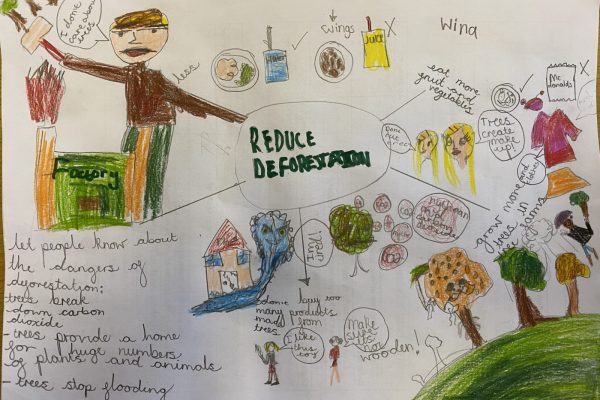
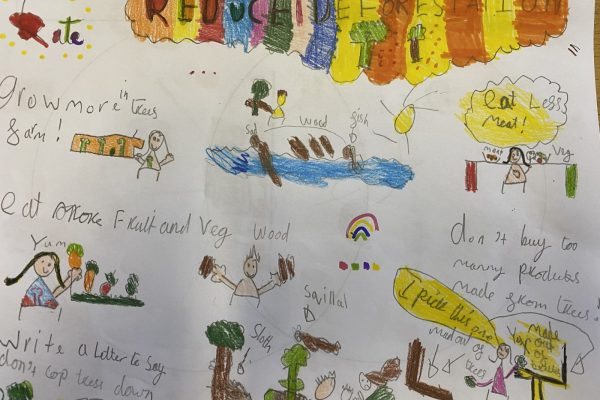
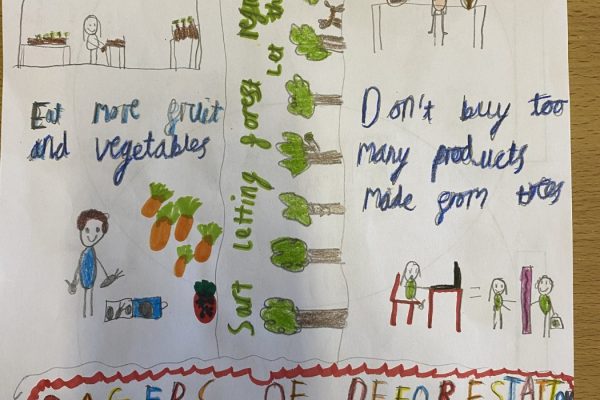
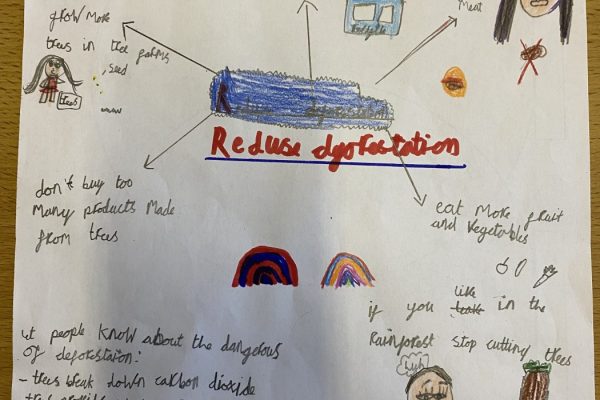
In Key Stage Two, geography lessons explore different types of natural disasters and focus on the impact of these in specific locations across the world. The children also study key types of settlement and land use in their given location and the way global warming, deforestation and tourism are changing these environments.
In Key Stage Two, map skills are developed further using Digimap, globes and atlases, as well as using compass directions and grid references. Children also develop their fieldwork skills, as we recognise how fortunate we are to be based in Hackney, a locality which has a unique social context, which forms a basis of investigation and exploration to compare and contrast with other locations across the globe. In each year group in Key Stage Two, the children carry out a local area study, which involves using Digimap to plan a local area walk, recording their observations and analysing their findings to inform their geography learning. Furthermore, the children in Year 5 visit the River Lea to investigate the features and formation of a river.
Impact
Our geography curriculum provides exciting opportunities for all children to explore the environment around them and understand the similarities and differences with other environments at different scales. Children are provided with an insight into how physical and human geography can both influence and be influenced by human activities on a local, national and international scale and through working as geographers and engaging with the local environment, children learn through varied and first-hand experiences, about the world around them.
Outcomes in the children’s geography books evidence a broad and balanced geography curriculum and demonstrate children’s ability to use Tier 3 geography vocabulary correctly in context. It is also evident to see the impact of fieldwork and application of key geography skills, including map work, in deepening understanding. The pupils at St John St James thoroughly enjoy their geography lessons and pupil voice showcases their ability to talk about their knowledge and how it progresses across their time at primary school.
Humanities Curriculum Map